Are you tired of no-shows for initial consults or talking to leads who aren’t a good fit or just not ready for your services?
Appointment booking funnels can help! They are a great way to improve your process for booking your initial consultations or appointments with new or potential clients.
And, you can use appointment booking funnels to automate appointment scheduling, as well as qualify and nurture potential clients before your first appointment.
So let’s dive in and see how they work!

Appointment booking funnels are lead generation funnels
What is a lead funnel?
In general, a lead generation funnel is a repeatable process you send your clients through to help them to decide to work with you.
Lead funnels come in many shapes and sizes. For example, you could have an email marketing lead funnel where you offer a free download that is delivered by email. Then, you’d deliver a series of emails to nurture the lead and help them.
Or you could use a simpler funnel without email marketing. In this case, you could offer a free quiz or an assessment. When the potential lead gets the results, you then also offer to schedule a free consult or strategy call.
As mentioned above, booking funnels automate the process for making the appointments for your initial consults and free calls with potential clients. The goal is to make the process easy for the potential client to book the call and to make the process more efficient and effective for you.
Customer journeys
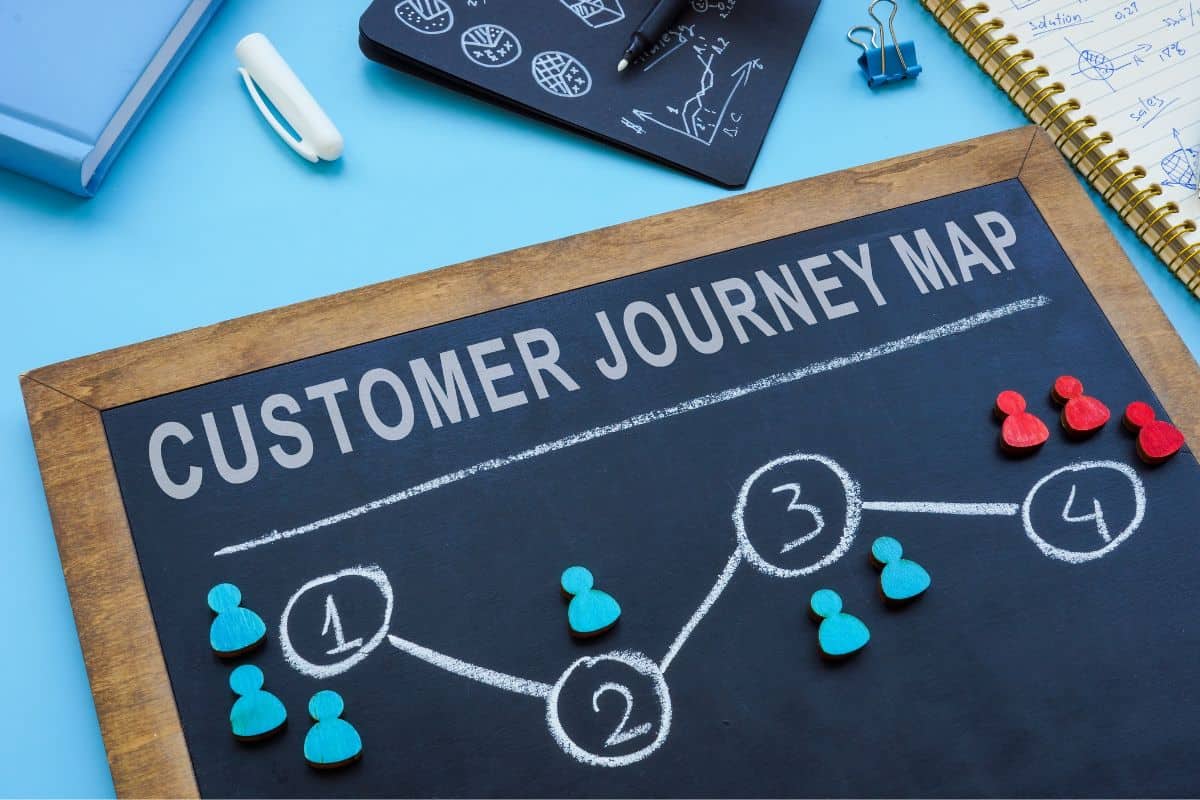
Every funnel you have for your business needs to match where your target client is in their own personal buyer’s journey. Most clients will go through the following steps before deciding to work with you:
- Problem Unaware: Your potential clients don’t really know yet that they have a problem or need help.
- Problem Aware: Your potential clients are feeling some pain or frustration and know they have a problem to solve, but don’t know of any solutions yet.
- Solution Aware: Your potential clients know what kind of help they need, and they’re just learning about the solutions available to them.
- Decision Stage: Your potential clients are evaluating their options.
- Action: Your potential clients make a decision and decide to move forward with a solution and service provider.
The appointment funnel is most effective when a potential client enters it at the Decision Stage. At this point, the lead is seriously thinking about getting help and is more likely to complete every step of the funnel, show up for the call, and to become a client.
How Appointment Booking Funnels Work
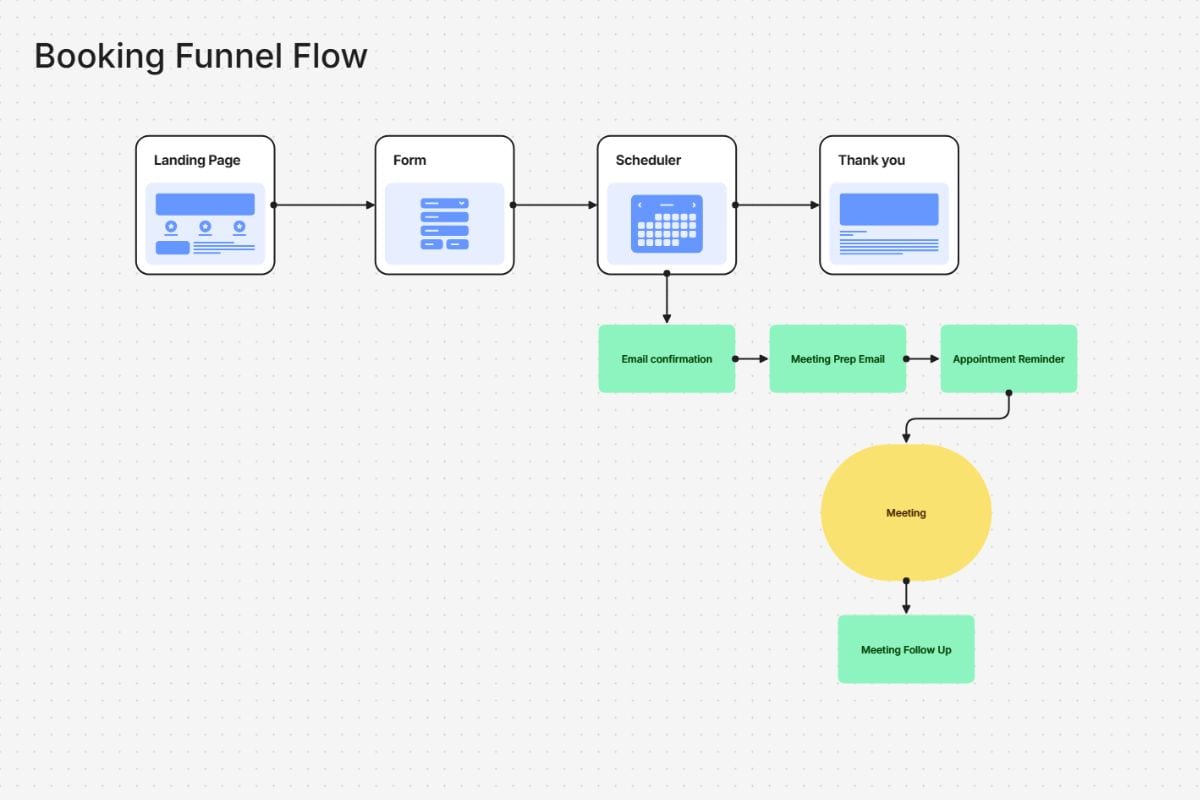
These funnels guide your potential client through the necessary steps to make the initial appointment with you, set the stage for a great call, and can provide necessary follow-up after the call.
These types of funnels include the following elements: landing page, booking form, online scheduler, thank you page, and automated emails.
The appointment landing page
Effective funnels use the idea of micro-actions or micro-commitments. These are small, low-risk steps leads take to help them continue through the funnel. So for example, instead of forcing a lead to book an appointment immediately, you might first explain to the lead how the initial consults work.
That’s where the appointment booking landing page comes in. It is a simple page that acts like sales pages for your calls. This page explains the benefits of the call and how the call works. The landing page also outlines a straightforward process for booking the call.
You can make the landing page simple or complicated, depending on how much of a commitment the lead needs to make for the call. For example, if the initial call is more of a short introductory call, a very short landing page with a few sections and a link to book the call is enough.
However, if your initial consult is more involved, you may want to write a longer landing page that clearly outlines why the lead should invest the time in the call.
You also need to include Calls To Action, or CTA’s throughout the page. This CTA is usually a link to your online scheduling system. Your goal is to make it easy for the lead to schedule the appointment when they’re ready.
Automated Scheduling System
Your appointment also funnel needs an online automated appointment scheduler so making an appointment with you is frictionless. You can use systems like Calendly, Acuity, or Cal.com. Or, you can build an appointment booking system into your website.
Booking Questionnaire and Form
Your funnel will need some type of form or questionnaire to gather information you need for your appointment. You could just collect basic contact information, but I recommend trying to gather some information about the lead too, such as their business and what kind of help they need.
If you need more leads, I would keep this form short and simple. You don’t want to discourage leads from scheduling appointments because the form looks complicated and time consuming.
However, if you have too many leads, or you’re having problems with no-shows and poorly qualified leads, you can ask some qualifying questions on the booking form.
Longer forms can qualify leads on their own by asking the right questions. You can also set up some conditional logic so not all of the leads are directed to the online scheduler, depending on their responses to certain question. The unqualified leads can then be directed to a special page, like a simple thank you for your interest page or to some helpful resources.
However, sometimes you need a more rigorous qualifying system before you actually schedule the appointment. In those situations, you can treat the form as an application or inquiry form, and then only send a link to the appointment booking system after you’ve had a chance to review the lead’s responses yourself. This obviously takes a bit more time to set up, but it might save you time in the long run if you’ve just got too many leads otherwise.
Automated Emails
Finally, a key ingredient of your funnel is a series of automated emails that go to the lead after they schedule the appointment. Here’s what you need:
- You’ll need an email to confirm the appointment.
- You’ll need appointment reminder emails.
- You can add a few emails to explain what will happen during the apppointment and detailing any preparation the lead needs to do before the meeting.
- You’ll need a follow up email after the call. You may not be able to automate this email if it needs to be tailored to each lead, but I would set up some templates you can use to write these emails quickly.
- You could also prepare a set of emails to send to appointment no-shows, offering them to make another appointment or asking them to sign up for your newsletter instead.
How to Feed the Funnel
Now that you’ve got your funnel set up, you need to feed the funnel with potential leads. Here are four simple ways you can get that done.
Website CTA’s
You can place website Calls-to-Action (CTA’s) or buttons, in strategic places on your website to ask website visitors to schedule a call. Once the website visitor clicks the button, they are redirected to your booking landing page.
Lead Magnets
You can include links to your booking landing page in email automations you use to deliver your lead magnets. You can even link to the booking page from the lead magnets themselves.
Links in Social Media Accounts
Instead of linking to your website’s home page from your social media accounts, why not link to a booking landing page instead?
You could design a special booking landing just for this purpose so that it targets potential clients in an earlier stage of the buyer’s journey, such as the Problem Aware stage. A landing page like this would probably have a higher conversion rate than most home pages.
Links in Email Signatures
This one is super simple! Just add a link to your main booking landing page in your email sigunature instead of a link that goes directly to your scheduler. You can test to see if you get more appointments that way.
How Booking Funnels Save Time
Now that you’ve learned how to build a booking funnel, you might be wondering if all of that work is worth the time and effort. Good question!
While it will take some initial time investment to get things set up, there are several ways an automated booking system like this can save you time.
Qualify leads
Asking the right questions before someone books an appointment is a great way to qualify leads and avoid wasting time with leads that aren’t a good fit or who aren’t quite ready yet to work with anyone.
As mentioned previously, even just asking someone to go through the steps of the funnel will eliminate a lot of spammers and tire kickers.
Ask Me A Question
This is your chance to pick my brain for free! Simply submit a question you have about your website, and I’ll answer you by email.
Ask your questionImprove effectiveness of your initial consults
Again, by asking key questions before someone books an appointment, you already know a lot about your potential client ahead of the call. Then, you can focus your call on what’s important to them and to you.
Automate mundane tasks
Booking appointments can be a tedious task. Without any kind of automation, you end up sending endless emails to find a good date and time. Or, you end up playing phone tag trying to schedule things.
If you’re meeting virtually, you then have to set up that meeting, too and send links. A properly configured booking system can put this process on auto-pilot for you.
Is an appointment booking funnel right for you?
Whether or not your business would benefit from a booking funnel is up to you. Here is a list of questions to help you decide.
- Are you wasting time with poorly qualified leads?
- Does booking appointments and intial consults feel like drudgery?
- Are you losing leads because you can’t always reach out to them quickly enough?
- Are you wanting to set up a better client experience from initial contact to onboarding?